
General Cell Lines and Cell Cultures

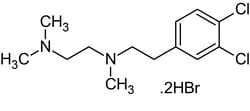
Abcam BD 1047 dihydrobromide, sigma1 receptor antagonist, 10MG
MW 437 Da, Purity >99%. Selective σ1 receptor antagonist. Shows centrally-mediated antianalgesic, antiaddictive and antidystonic effects in vivo. Blood-brain barrier permeable.
The product is subject to the following: Abcam Restricted Use Statement


ATCC Calu-3; Lung Adenocarcinoma; Human (Homo sapiens)
Calu-3 epithelial cells are isolated from lung tissue derived from a 25-year-old, White, male patient with lung adenocarcinoma who received prior therapy with cytoxan, bleomycin, and adriamycin. This cell line is valuable for SARS-CoV-2 propagation in vitro, is a suitable transfection host, and has applications in cancer and toxicology research.


ATCC Quantitative Synthetic; Chlamydia trachomatis; LGV Type 2 DNA
Quantitative Synthetic Chlamydia trachomatis LGV Type 2 DNA can be used for assay development, verification, and validation as well as monitoring of day-to-day test variation and lot-to-lot performance of molecular-based assays. The quantitative format allows for the generation of a standard curve for quantitative PCR (qPCR) to determine bacterial load. Preparation includes fragments from MOMP, 16S rRNA, pmpH, and dnaB regions.

Promocell GmbH PromoCell HPF-c 500,000 Human Pulmonary Fibroblasts, cryopreserved
Primary Human Pulmonary Fibroblasts (HPF) are isolated from human lung tissue. They are often used for studying lung tissue repair, tissue remodeling after injury, or the response after pulmonary inflammation. Fibroblast disorders like pulmonary fibrosis or hypoxia-induced pulmonary hypertension can also be investigated with cultured HPF.

ATCC Marinobacter nauticus; Strain VT8; genomic DNA
Genomic DNA isolated from Marinobacter nauticus strain VT8 (ATCC 700491). This product can be used in PCR and other molecular biology applications.

Biochain Institute Inc Paraffin Tissue Section - Human Adult Normal: Brain: Olfactory ( region), 5 slides/PK
BioChain's tissue products are based on the sample repository network established following the IRB-approved ethical standard and procedures. BioChain's formalin fixed paraffin embedded (FFPE) tissue section line encompasses a large selection of tissue sections which are suitable for immunohistochemistry and in situ hybridization assays. The tissue sections are approximately 5 um thick. For those customers who want to perform FFPE DNA and RNA isolation, BioChain can provide tissue section slices in tubes instead of mounting them on glass slides.

Biochain Institute Inc Frozen Tissue Section - Human Adult Normal: Heart: Auricula (right), 5 slides/PK
BioChain's tissue products are based on the sample repository network established following the IRB-approved ethical standard and procedures. BioChain's Frozen Tissue Slides are ideal for rapidly identifying cellular localization of RNA or protein. A single human adult normal tissue with 5-10 um thickness is mounted on a positively charged glass slide. The slides are fixed and dehydrated with acetone for consistent results with in situ hybridization and immunohistochemistry. More organs may be available upon request.
Eurofins Discoverx ChemiScreen SST3 Somatostatin Receptor Stable Cell Line, 2 vials. (HTS171C)
The ChemiScreen SST3 Somatostatin Receptor Stable Cell Line is an engineered cell line for use in studying drug candidates (small molecules or biologics) targeting GPCRs. This cell line enables assessment of ligand (e.g. somatostatin) based activation of SSTR3 GPCR activity via detection of increasing levels of intracellular calcium. The included cell line overexpresses SSTR3 alongside endogenous high levels of the promiscuous G protein, Gα15, coupling the receptor to the calcium signaling pathway. Upon activation of SSTR3, the resulting calcium activity can be fluorescently assayed. This stable modified cell line is provided as two vials of cryopreserved cells. For detailed product information, visit www.discoverx.com/targets/gpcr-target-biology.

Biochain Institute Inc Matched Pair - cDNA - Human Primary and Matched Metastatic Tumor Tissue: Breast, 10 x2 rxn /PK
BioChain's human cDNA matched pair products include: Primary Pair (PP), Primary and Metastasis Pair (PM). PP consists of cDNA prepared from primary tumor and its adjacent normal tissue; PM consists of cDNA prepared from primary tumor and corresponding metastatic tumor. cDNAs in each pair are prepared from the same donor. This product line is designed for identifying tumor-specific (or disease specific) genes and tumor metastatic genes.


iQ Biosciences Human Treg Suppression Assay Kit w/ CFSE-Labeled PBMCs - 5 pk
Human Treg functional kits with Regulatory T cells and PBMC responders. PBMCs are CFSE-labeled for downstream functional readout. Treg cells are validated for regulatory function. Used to test molecules for modulation of Treg function. Carefully cryopreserved to ensure high viability (> 90%) upon thawing. All orders come with an iQ Certificate of Analysis


ATCC Saccharomyces cerevisiae
An ampoule containing viable cells (may include spores and mycelia) suspended in cryoprotectant.
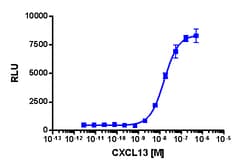
Eurofins Discoverx PathHunter C2C12 CXCR5 β-Arrestin Cell Line, 2 vials. (93-0204C7)
The PathHunter CXCR5 cell line is a stable, engineered cell line for use in studying drug candidates (small molecules or biologics) targeting GPCRs. This cell line enables assessment of ligand (e.g. [ligand]) based activation of CXCR5 GPCR activity via detection of β-arrestin recruitment. The included cell line overexpresses ProLink-tagged CXCR5 and EA-tagged β-Arrestin-2. Activation of CXCR5 stimulates the recruitment of β-Arrestin-2 and produces EFC signal. This stable modified cell line is provided as two vials of cryopreserved cells. For detailed product information, User Manual and datasheet, visit www.discoverx.com/gpcr.
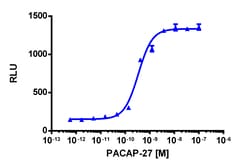
Eurofins Discoverx cAMP Hunter CHO-K1 ADCYAP1R1 (PAC1) Gs Cell Line, 2 vials. (95-0064C2)
The cAMP Hunter ADCYAP1R1 (PAC1) Gs cell line is a stable, engineered cell line for use in studying drug candidates (small molecules or biologics) targeting GPCRs. This cell line enables assessment of ligand (e.g. PACAP) based activation of ADCYAP1R1 GPCR activity via detection of increasing levels of intracellular cAMP. This product uses EFC technology. The cells overexpress wild type ADCYAP1R1, a naturally Gs coupled GPCR. Upon activation of ADCYAP1R1, the increase in levels of intracellular cAMP leads to an increased signal from EFC when the cAMP detection kit is applied. This stable modified cell line is provided as two vials of cryopreserved cells. For detailed product information, User Manual and datasheet, visit www.discoverx.com/gpcr.